For many employers, the annual health insurance renewal process feels like a trap. Premiums rise relentlessly, year after year, with little transparency or control. You negotiate, you switch carriers, but the cycle continues, squeezing your budget and frustrating your employees. But what if you could break free? This is the story of how one employer, Axiom Healthcare Services, did just that. By shifting their mindset and partnering with a true guide, they transformed their benefits from a costly burden into a strategic advantage.
Key Questions Answered in This Article
- How can employers break the endless cycle of rising health insurance premiums?
- What simple steps can significantly reduce healthcare costs without cutting employee benefits?
- What does it mean to be a fiduciary for your company’s health plan, and why is it crucial?
- How can optimizing your Pharmacy Benefit Manager (PBM) unlock massive savings in your health plan?
Trapped in the Healthcare Renewal Cycle
Axiom Healthcare Services, a management company for senior living facilities with about 1,000 employees, was stuck in a familiar rut. Each year, their leadership team would brace for the inevitable renewal notice, which always came with a significant premium increase. Their broker would then go through the motions of negotiating, returning with a slightly less painful increase that was presented as a win. Sound familiar?
Brenda Kruse, a key member of Axiom’s benefits committee, described the frustrating loop: “We have been in the continuous cycle of, you know, the renewal. You wait for your renewal, you get it, and it’s an increase, usually a fairly large increase. And then you just wait for the broker to go back and negotiate… we just kind of got tired of being in that rut.”
This reactive, three-month scramble before renewal is the standard experience for most employers. It’s a model that lacks strategy, data, and true alignment of interests. Axiom realized their approach wasn’t working. Their previous broker offered no meaningful solutions, especially concerning their pharmacy spend, which accounted for a staggering 60% of their total healthcare costs. They were simply being shuffled between large carriers in a system designed to benefit the incumbents, not them or their employees.
A New Philosophy for Healthcare
Frustrated with the status quo, Axiom’s leadership encountered Donovan Ryckis and his team at Ethos Benefits. It was a meeting that would fundamentally change their approach to employee benefits. Ethos didn’t operate like a traditional broker focused on selling a risk transfer product. Coming from a background as a Series 65 Registered Investment Advisor (RIA), Donovan brought a fiduciary mindset to a world that desperately needed it.
“Imagine a 401k where an advisor brings it to you [and says], ‘I can’t tell you what investments are in here, how much they cost, how much they’ve returned… Are you ready to sign up?’ That’s how healthcare operates,” Donovan explains.
Ethos introduced Axiom to a proactive, strategic model. Instead of a last-minute renewal scramble, they proposed a three-to-five-year business plan for the health plan. This approach involved diagnosing the root problems first and then building solutions, rather than just sidestepping to another carrier. For Axiom, this meant finally getting a clear view of their data and a partner whose incentives were aligned with their own.
Understanding Your Health Plan Fiduciary Responsibility
One of the most significant shifts for Axiom was recognizing their fiduciary liability. Many employers mistakenly believe this legal responsibility only applies to their 401(k) or retirement plans. However, the Employee Retirement Income Security Act (ERISA) is clear: as soon as your employees contribute a single dollar towards their healthcare coverage, you have a fiduciary duty to act in their best interest.
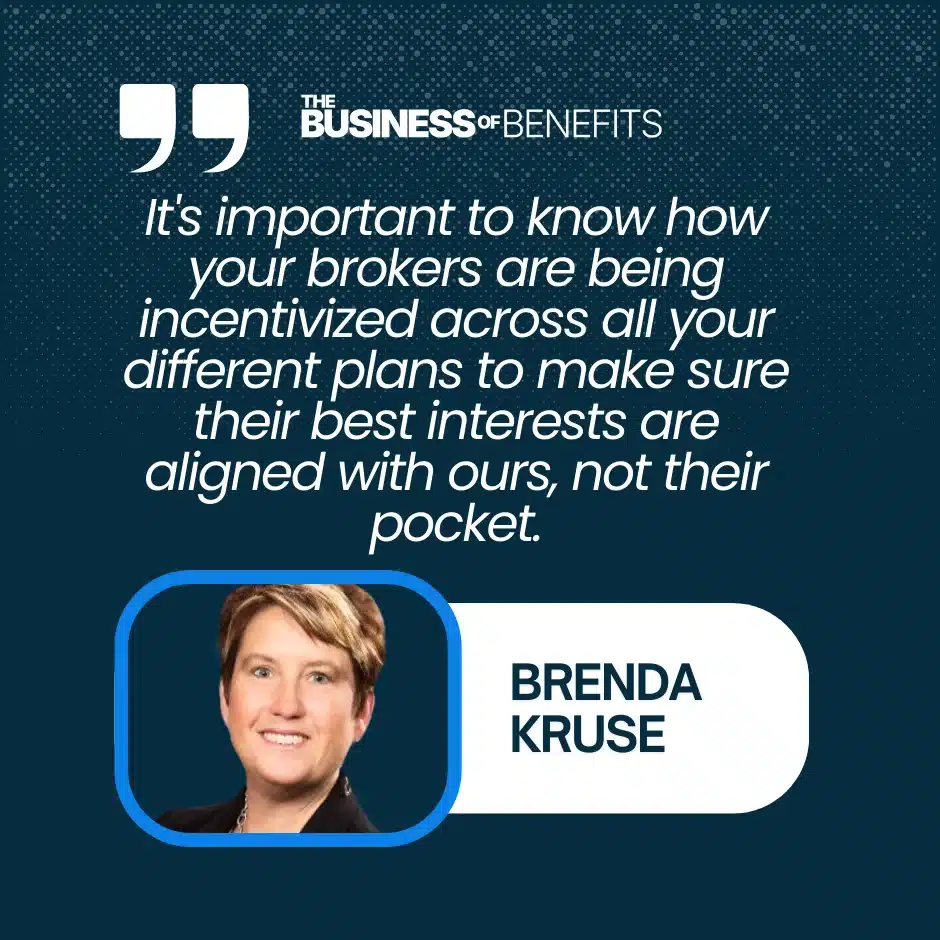
This means ensuring the plan is managed prudently and that all costs are reasonable. Axiom learned that their previous broker’s incentives were misaligned. When premiums went up, the broker’s commission-based compensation went up too. As Brenda Kruse insightfully noted, “We wouldn’t want to incentivize our employees for bad performance. So why would we want to incentivize our brokers for bad performance?”
Under the guidance of Ethos, Axiom established a formal benefits committee and began demanding full compensation disclosures from all vendors. This is a critical step for any employer. You have a right to know exactly how, when, and how much your consultants are being paid on every line of coverage. This transparency is the first step toward ensuring your partners are working for you, not for their own bottom line.
The Power of Healthcare Data Transparency
The key that unlocked Axiom’s ability to take control was data. Under their old, fully-funded plan, they had virtually no access to meaningful claims data. The carrier provided high-level summaries—for example, that they spent $270,000 on heart-related issues—but this information was not actionable.
Ethos helped them transition to a level-funded plan, a hybrid model that provides the cost-control potential of self-funding with the budget predictability of a fully-insured plan. Most importantly, it gave them 100% access to their claims data, “down to the penny.” Instead of vague categories, they could now see the specific CPT (procedural) codes, the providers, and the actual costs for every service. This transparency allowed them to move from guessing to strategizing.
This unbundling of the health plan was a critical step. Instead of buying a bundled product from one of four major carriers, Axiom, with Ethos’s help, began to manage the four key components of their plan independently:
- The Network: The PPO network of doctors and hospitals (e.g., United, Cigna) that employees use.
- The TPA (Third-Party Administrator): The entity that processes claims and answers employee questions.
- The PBM (Pharmacy Benefit Manager): The entity managing the prescription drug benefits.
- The Stop-Loss Insurance: The insurance that protects the company from catastrophic claims.
By marketing these four pieces separately, Axiom and Ethos created competition and were able to construct over 100 variations of a plan, all while keeping the same trusted network of doctors their employees were used to. This is a stark contrast to the typical four-carrier bake-off that yields minimal change.
Pharmacy Benefit Manager Optimization: The Fastest Path to ROI
With clear data in hand, the biggest problem area became immediately obvious: pharmacy spend. A staggering 60% of Axiom’s total healthcare costs were from prescription drugs, yet their previous broker had proposed no solutions to address it.
This is where PBM optimization delivered transformative results. Most employers are with one of the “big three” PBMs, which are often owned by the insurance carriers themselves. These traditional PBMs make money through opaque practices like “spread pricing” (charging the employer more than they pay the pharmacy) and retaining drug manufacturer rebates instead of passing them on.
Ethos helped Axiom switch to a transparent, pass-through PBM. This new partner had a completely different business model:
- No Spread Pricing: What Axiom paid was what the pharmacy received.
- 100% Rebate Pass-Through: All manufacturer rebates were returned to the plan, lowering costs.
- Supply Chain Solutions: They introduced options like international sourcing and no-cost mail-order programs for employees.
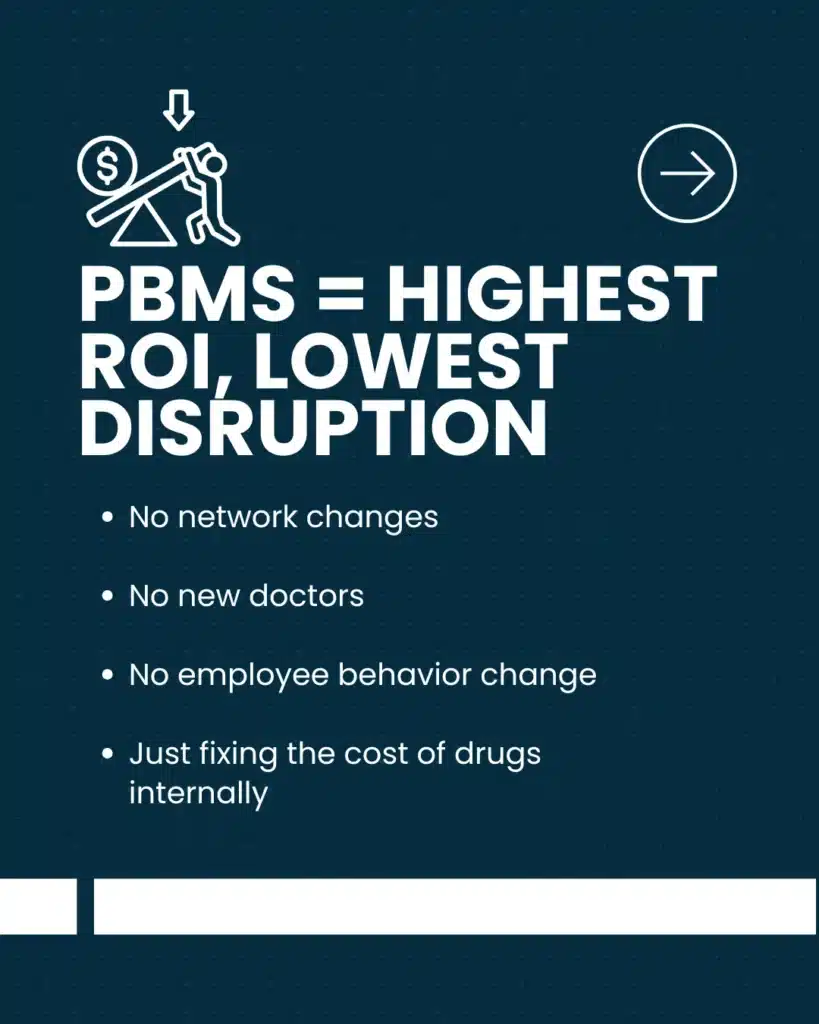
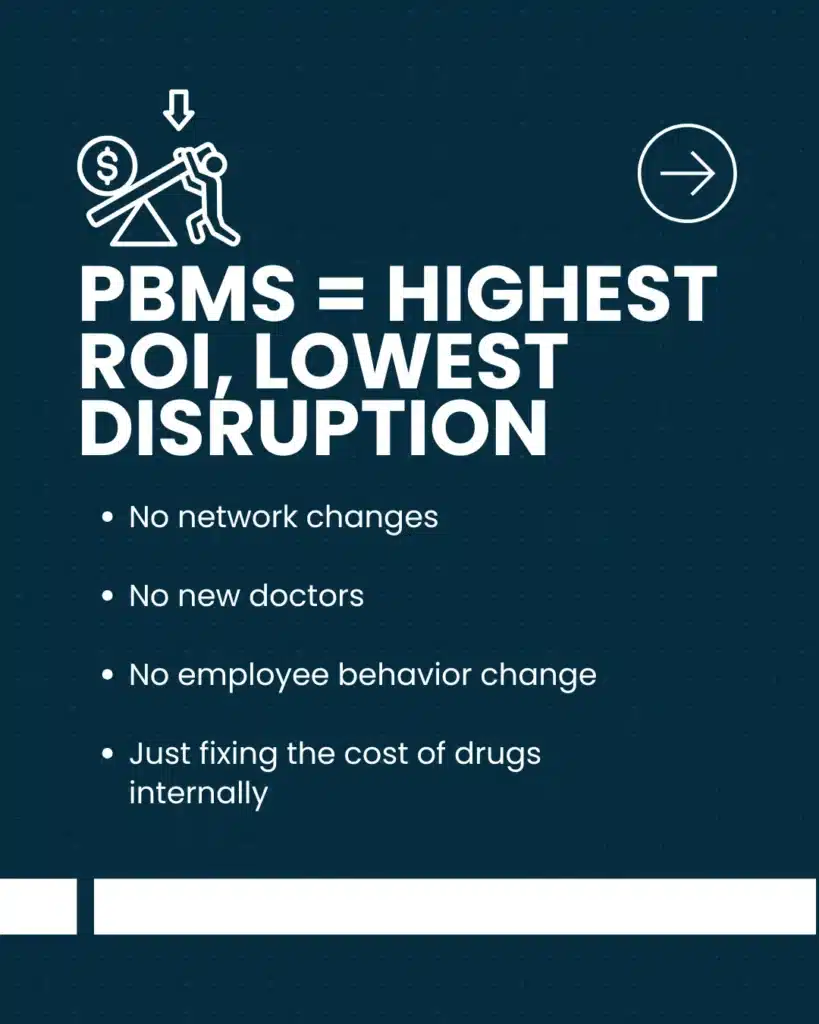
Donovan Ryckis emphasizes this point: “The PBM should always be one of the first steps any employer takes. It is the easiest, least friction, least disruption part of the healthcare plan to make a change and it’s the highest return on investment.” For Axiom, the change was seamless for employees but monumental for the plan’s bottom line, contributing to a 50-70% reduction in pharmacy costs.
The Results: How to Reduce Healthcare Costs and Improve Benefits
The impact of this new strategy was immediate and dramatic. When Axiom’s renewal came up, the initial offer from the carrier was a 2.6% decrease—already an unheard-of result. But Ethos, armed with data, knew they could do better. They went back to the negotiating table and secured a final renewal with an almost 13% decrease in premiums.
By taking control of their plan, Axiom not only saved the company a significant amount of money but also made healthcare more affordable and accessible for their entire workforce. They successfully broke the renewal cycle and turned their benefits program into a powerful tool for employee retention and satisfaction.
A Step-by-Step Guide to Replicate Axiom’s Success
So, what can you, as an employer, do with this information? Axiom’s story provides a clear blueprint. Here is a step-by-step workflow to begin taking control of your own healthcare plan.
Step 1: Embrace Your Fiduciary Role.
- Action Item: Formally establish a benefits committee with cross-functional leaders (CFO, HR, CEO). This isn’t just an HR decision; it’s a major financial and cultural one.
- Workflow: Create a committee charter that outlines your goals and decision-making process. Schedule regular meetings to review plan performance, not just at renewal time.
Step 2: Demand Complete Transparency.
- Action Item: Immediately request a full compensation disclosure (often called a 408(b)(2) disclosure) from your current broker or consultant. Ask them to detail every dollar they earn from your relationship, including commissions, bonuses, and any equity interest in the carriers they recommend.
- Workflow: If your broker is hesitant or provides a vague response, it is a major red flag. A true partner will be fully transparent.
Step 3: Conduct a PBM Audit.
- Action Item: Find out who your Pharmacy Benefit Manager is. Is it a transparent, pass-through model, or is it a traditional PBM owned by your carrier? Ask your broker for a detailed report on your pharmacy spend, including rebate amounts and spread pricing.
- Workflow: Engage an independent expert to analyze your PBM contract. The goal is to move to a model where 100% of rebates are passed through to your plan and there is no spread pricing.
Step 4: Get Control of Your Data.
- Action Item: If you are in a fully-insured plan, explore moving to a level-funded or self-funded arrangement that grants you full access to your claims data.
- Workflow: Use this data to identify the true cost drivers in your plan. Are they high-cost claimants, specific procedures, or pharmacy? Your strategy must be built on this data, not on carrier summaries.
Step 5: Develop a Multi-Year Strategy.
- Action Item: Shift your thinking from the 90-day renewal scramble to a 3-5 year strategic plan. Your health plan is one of your largest expenses; it deserves a long-term vision.
- Workflow: Work with your committee and a trusted advisor to set clear goals for cost containment, employee well-being, and plan enhancements over the next several years.
Take Control of Your Health Plan
Axiom Healthcare Services is not an outlier; they are a model for what is possible when employers decide to take control. They moved from being a passive participant in a broken system to the active, empowered hero of their own benefits story, with Ethos Benefits serving as their trusted guide.
Breaking the renewal cycle is not about finding a magical solution. It is about a fundamental shift in philosophy—from reactive purchasing to strategic management, from opacity to transparency, and from misaligned incentives to a true partnership. By embracing your fiduciary duty and leveraging your own data, you can achieve what Axiom did: lower costs, better benefits, and a healthier, more engaged workforce.
Watch the Full Podcast Episode
This article is based on a podcast conversation with Brenda Kruse of Axiom Healthcare Services and Donovan Ryckis of Ethos Benefits. To hear the full story and gain even deeper insights, you can watch the complete episode below.